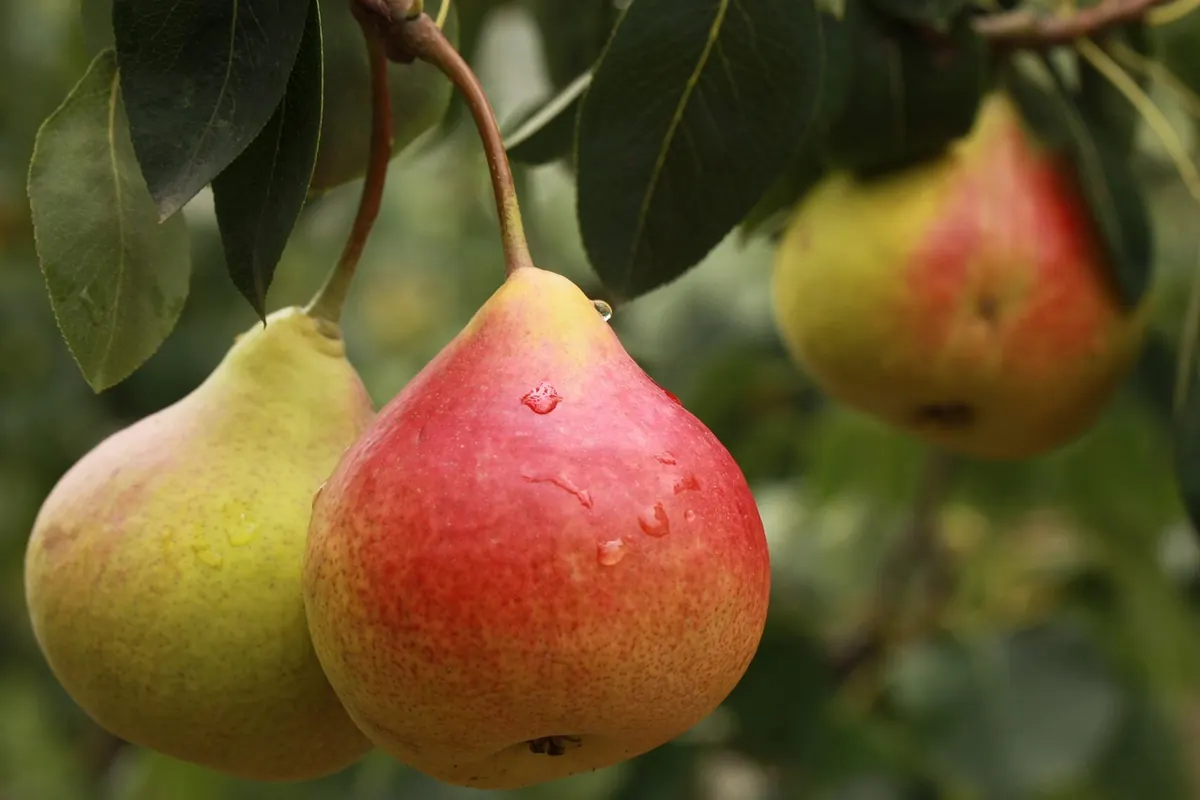
Pears manage a trick few other fruits pull off: rock-hard on Monday, collapsing by Friday. A bag of Conference from the supermarket arrives looking like small green cricket balls. Leave them alone and they will sit there for a week, then turn to mush in the space of an afternoon. The reason is that pears ripen from the inside out, and they respond to temperature far more than most fruit do. Get the cold-then-warm sequence right and you can take a pear from unyielding to dripping down your wrist in about two days. Get it wrong and you are eating either gravel or mush.
Why pears are sold hard
Pears are picked mature but unripe, and that is deliberate. A pear left to soften on the tree tends to go grainy and rotten at the core rather than sweet and buttery all the way through. Growers pick them firm so they travel and store well, then rely on you to finish the job on the kitchen worktop.
The crucial detail is the direction of travel. Ripening starts at the core and works outwards, so a pear can be perfectly juicy in the middle while the outside still feels firm. That is why squeezing the fat part of the fruit tells you almost nothing, and why a pear that feels evenly soft all over is usually past its best. Ripening is driven by ethylene gas, which the pear produces itself. Warmth speeds the process up; cold slows it down. Almost everything below follows from those two facts.
Know your pear
Varieties behave differently, and knowing which one you have saves a lot of guesswork.
- Conference — the long, narrow one with a speckled russet skin, and the most common pear in British shops. Firm and slightly grainy when underripe, sweet and floral when ready. Responds well to a couple of days in the fridge before ripening.
- Comice — round, green with a red flush, and the richest of the lot. It ripens quickly and its window is short: often less than 24 hours between perfect and overblown. Check it twice a day.
- Williams (sold as Bartlett in the United States) — the classic yellow pear with a strong perfume. Excellent eaten fresh and the best choice for poaching. Ripens fast, so keep an eye on it.
- Bosc — russet-brown, elongated and firm-fleshed. It holds its shape when cooked and takes longer to soften than the others, so bake with it rather than waiting for it to turn buttery.
- Anjou — pale green, mild and steady. It ripens slowly and forgivingly, which makes it a good pear for anyone who forgets to check.
- Packham's Triumph — lumpy, green and reliably sweet. Ripens unevenly, so test more than one spot at the neck before deciding.
The cold-then-warm method, step by step
A spell in the fridge first, then a move to room temperature, mimics what happens to a pear after harvest and gives you far more control than simply leaving it on the side.
- Check the fruit. Discard any pear with a broken skin, a soft brown patch or a damp bottom. One rotten pear will hurry the rest along in the wrong direction.
- Chill them for one to three days. Leave the stems on and put the pears loose in the fridge, or in a paper bag. This cold spell sets the ripening process up properly; for firm varieties such as Conference or Bosc, a full week in the fridge does no harm at all.
- Move them to room temperature. Take out only as many as you plan to eat in the next couple of days. Somewhere out of direct sun, at roughly 18–21°C, is ideal.
- Speed things up if you need to. Drop the pears into a paper bag with a ripe banana or apple. Both release ethylene, and the bag traps it around the fruit. Never use a plastic bag — trapped moisture leads to mould long before softness.
- Test daily, then twice daily. Press gently at the neck, right beside the stem. That is the first part to give.
The neck test
Forget the thumb-in-the-middle approach. Cup the pear in your palm and press lightly at the neck with your thumb. If it feels as hard as the rest of the fruit, put it back. When the neck yields slightly — like the flesh between your thumb and forefinger — the pear is ready to eat. If the whole fruit gives under gentle pressure, eat it today, and expect the core to be slightly brown.
Ripe pears smell sweet and faintly floral at the stem end. That scent is a reliable second signal, and it is worth trusting if you are unsure about the feel.
When to move pears to the fridge
Cold does not stop ripening, it slows it to a crawl. The moment a pear passes the neck test, move it to the fridge if you are not eating it straight away. That buys you roughly three to five days of good eating — sometimes a little longer for firm varieties, less for Comice.
Small things that make a difference
Keep ripening pears away from the bananas in the fruit bowl unless you are actively trying to hurry them along. Store ripe ones in the salad drawer, spaced out rather than piled up, and give them a bit of air. Take a pear out of the fridge half an hour before eating: cold dulls the flavour, and a pear brought up to room temperature tastes noticeably sweeter.
Mistakes that ruin a good pear
- Ripening on a sunny windowsill. Heat softens the outside before the core is ready and turns the flesh mealy.
- Sealing them in plastic, which traps moisture and invites mould.
- Judging ripeness by colour. Many pears stay green when perfectly ripe.
- Buying a large bag and ripening all of them at once. Chill the whole bag, then bring out two or three at a time.
- Waiting for a Comice to soften right through. It will be brown at the core by then.
If a pear does slip past you, nothing is wasted. Overripe fruit mashes into a smoothie, poaches beautifully in red wine or syrup, and cooks down into chutney with onions, vinegar and a little ginger.
The routine, in short
Buy or pick firm pears, chill them for a day or three, then bring out only what you need and leave them at room temperature. Check the neck each morning and evening. When it gives, eat one — and put the rest in the fridge to hold them there. Two days is typical from fridge to plate, and once you have done it a few times you will judge it by feel rather than by the calendar.
Photo: rkrl001 / Pixabay