A mango gives you plenty of notice before it is ready to eat. The problem is that most of us check only the colour, and colour is the least trustworthy of the four signs. A green-skinned Keitt can be perfectly ripe, while a blushing Tommy Atkins can still be hard through the middle.
Run through the checks below before you cut. It takes about ten seconds and saves you from the two usual disappointments: a mango that tastes of nothing much, and one that collapses into mush the moment the knife goes in.
1. Colour: a useful clue, not a verdict
Ripening usually shifts the background colour of the skin from flat green towards yellow and gold. The red blush on top is a different matter. That blush deepens with sun exposure, not with ripeness, so a deeply red shoulder proves nothing at all.
Look instead at the skin around the stem and along the shoulders. A hint of yellow appearing behind the green is a good sign. Still uniformly matte green? Give it another day or two. Skip any mango with dark sunken patches, greyish bruising or shrivelled, leathery skin, however ripe the rest of it looks.
2. Smell: the most honest test
Hold the mango close to your nose, right at the stem end, and breathe in. A ripe one smells sweet and slightly floral, with a resinous, peachy edge. You should pick it up without having to hunt for it.
No smell at all means no rush. A sharp, sour or faintly boozy whiff means it has gone past its best and is starting to ferment. If your mango has been in the fridge, let it sit on the counter for fifteen minutes first; cold mutes the aroma and can make a ripe mango smell like nothing.
3. The gentle squeeze test
Cup the mango in your palm and press with your thumb, just off-centre. Ripe fruit gives slightly under gentle pressure, then springs back, rather like a ripe avocado or a good peach. The flesh underneath should feel full, not hollow.
Rock hard means unripe. If your thumb leaves a dent that stays put, it is overripe. The sweet spot is a little give in the middle with slightly firmer flesh at the two ends. Press gently, and only once or twice, particularly on soft fruit.
4. The stem end
The stem end is the small nub or dimple at the top of the fruit, and it changes as the mango ripens. On a ripe mango, that area sits slightly recessed and feels plump and a touch soft. You may see a small dried fleck of sap, brown or black and sticky, which is perfectly normal.
An unripe mango has a firm green stem and milky sap if you pick at it. A stem end that is wet, weeping or surrounded by mushy flesh is a warning sign. One practical note: mango sap irritates the skin of some people, so wash your hands after handling it. If you develop an itchy rash, ask a pharmacist for advice.
The ten-second check, in order
- Background colour: is there any gold or yellow behind the green?
- Smell at the stem end: sweet and floral, or nothing at all?
- Gentle squeeze: slight give, or hard as a stone?
- Stem end: plump and slightly soft, not weeping or mushy?
- Weight: does it feel heavy for its size? A ripe mango does.
If three of those four main signs pass, cut it. If only the colour has changed, leave it out for another day and check again tomorrow morning.
If your mango is already overripe
Overripe mangoes look wrinkled, feel soft all over and may leak juice. The flavour is often at its most intense, so the issue is texture rather than taste. Bin it without hesitation if you spot mould, or if it smells sour or strongly of alcohol.
Good rescues for a soft mango
- Blend it. Smoothies and mango lassi are made for soft fruit. Yogurt, a squeeze of lime and a little honey is all you need.
- Make a coulis. Blend the flesh, sieve it and spoon it over ice cream, yogurt or cheesecake.
- Turn it savoury. A chunky salsa or chutney with red onion, chilli, lime and coriander hides a soft texture beautifully.
- Freeze it. Spread chunks on a tray, freeze until solid, then bag them. They keep for a few months and work in smoothies straight from the freezer.
- Cook with it. Muffins, loaf cakes and upside-down cakes all cope with fruit that is past its slicing best.
- Use it as a marinade. Blended with oil, ginger, chilli and lime, soft mango makes a good tenderising base for chicken or tofu.
Overripe does not mean unusable. It means stop slicing and start blending.
Getting it to the finish line
Leave firm mangoes on the counter at room temperature, out of direct sun. Do not refrigerate them while they are hard: cold stalls the ripening process and can leave the fruit floury. To hurry things along, drop the mango into a paper bag with a banana or an apple. Check it daily, because two days in a warm kitchen can take it from firm to perfect, and a third can take it past that.
Once a mango passes the checks above, it is ready to eat, so use it within a day or two for the best flavour. If you need longer, move it to the fridge salad drawer, where a ripe mango holds for three to five days. Cut mango keeps in an airtight container for around three days; a squeeze of lime slows the browning. Cut chunks freeze well, so nothing has to be wasted.
Check the colour, smell it at the stem, give it one gentle squeeze and look at the stem end. Four signs, ten seconds, and no more disappointing mangoes.
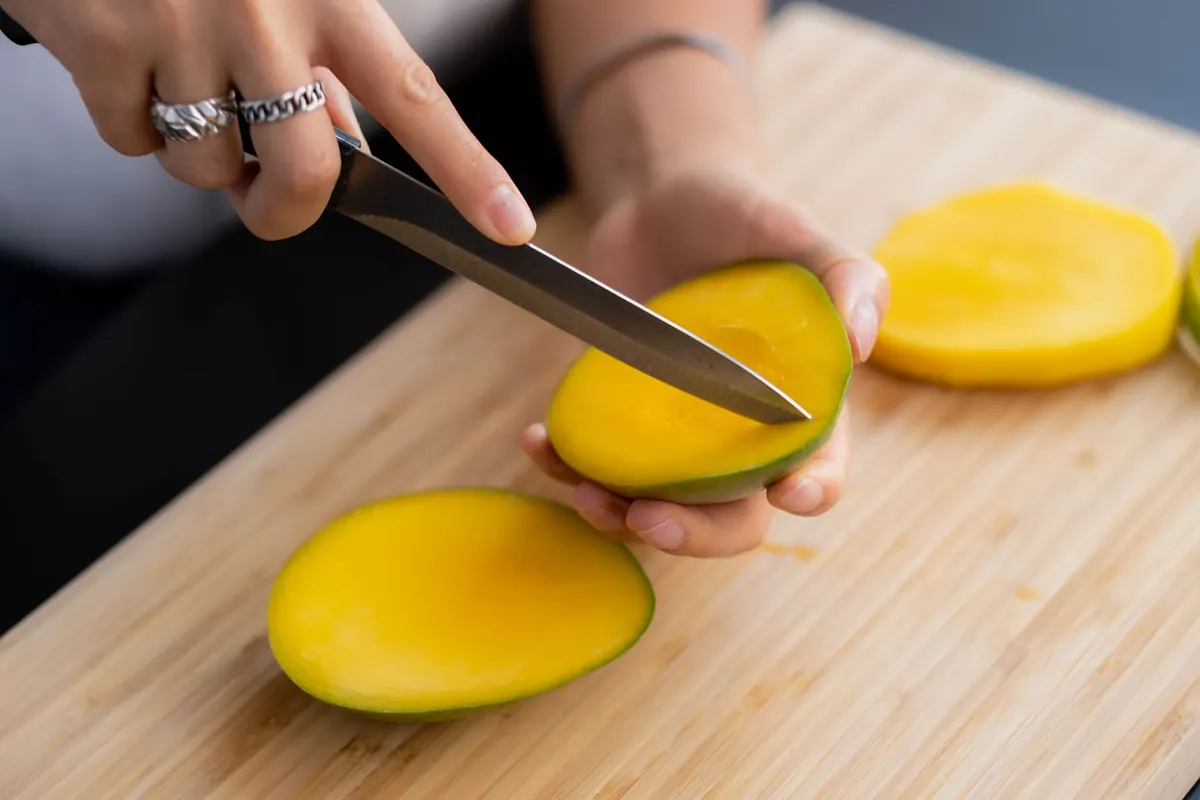
Photo: Ron Lach / Pexels