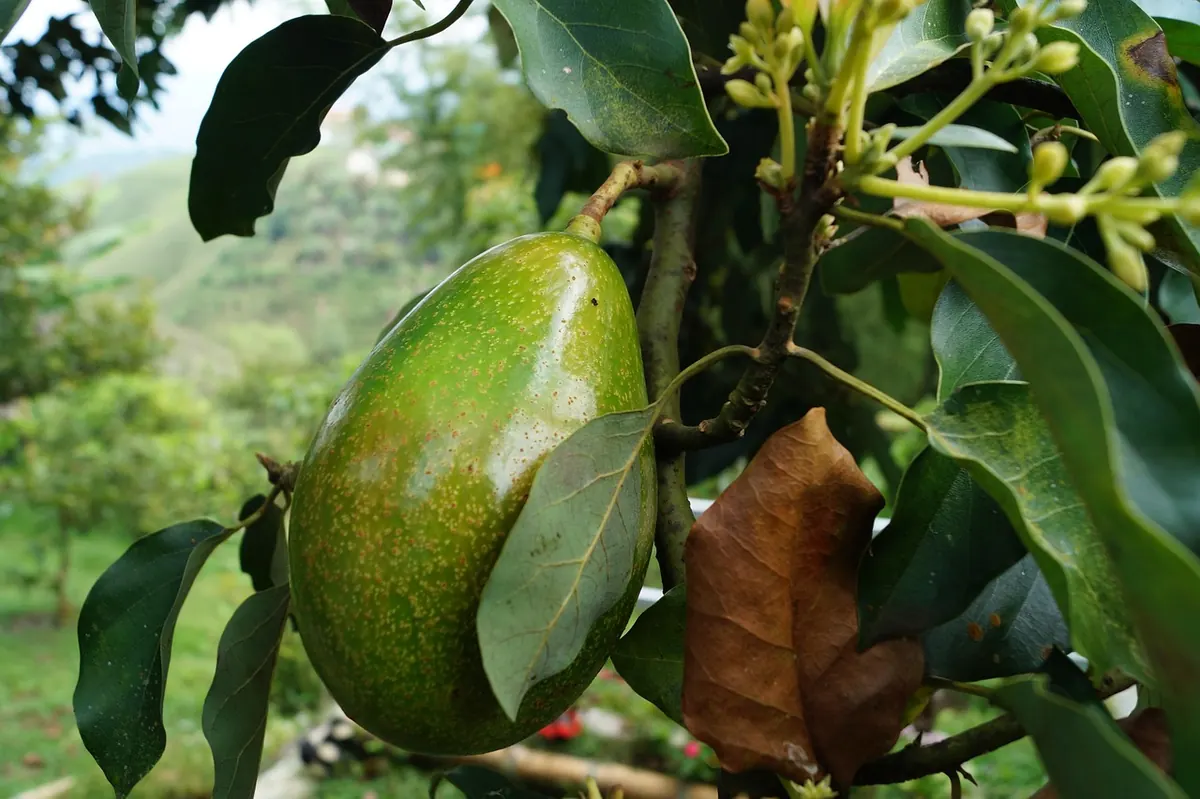
You have plans for that avocado. Toast, probably. Or a bowl of guacamole for people arriving in an hour. Then the knife hits something solid and you are left staring at a green brick.
The good news is that the gap between rock-hard and ready can sometimes be squeezed into a single day. The catch is that it depends on how far along your avocado already is, and on picking the right method rather than the fastest-sounding one. Here are five approaches, with timings based on an ordinary British kitchen: room temperature around 18–21°C, no Californian sunshine, and a radiator that is either on full or off entirely.
Check the avocado before you do anything
Ripening is a chemical process, and how long it takes depends almost entirely on your starting point. Squeeze the fruit gently in your palm rather than with your fingertips, which bruise it, and work out which of these you have.
- Rock hard, no give at all. This one needs days, not hours. Nothing below will get it ready tonight.
- Firm, but yields very slightly near the stem end. The ideal candidate. Bag-and-banana will usually finish the job inside 24 hours.
- Gives to gentle pressure all over. Already ripe. Eat it today or refrigerate it.
- Soft, with hollow-feeling patches. Past its best. Cut it open before you build a meal around it.
Worth remembering at the till: supermarket labels saying "ripe and ready" are a rough guide at best. Squeeze before you buy, and if you need an avocado for a specific meal, buy two — one ready now, one hard for later in the week.
Method 1: The paper bag with a ripe banana
The old trick, and still the most reliable one. It works because ripening fruit gives off ethylene gas, and trapping that gas around the avocado speeds up the process.
- Put the avocado in a brown paper bag. Not plastic — a sealed plastic bag holds moisture and invites mould.
- Add a ripe banana, or a ripe apple. A speckled banana works well; a green one barely helps at all.
- Fold the top over loosely. You want a pocket of ethylene around the fruit, not an airtight container.
- Leave the bag at room temperature, somewhere out of direct sunlight.
- Check every 12 hours by squeezing gently. A firm avocado usually softens within a day; a harder one takes 36 to 48 hours.
Bear in mind that the banana will ripen faster too. If you are not in the mood for banana bread, use an apple instead — it releases less ethylene and will not race ahead as quickly.
Method 2: Find the warmest spot in the house
Warmth speeds up the enzymes behind ripening, so where you put the bag genuinely matters. Good options are an airing cupboard, the top of the fridge, a shelf above a radiator, or a spot beside the boiler. Aim for a comfortable mid-twenties in Celsius.
Push it too far and it backfires. Above roughly 30°C, ripening slows and rot takes over. A sunny windowsill has the same problem for a different reason: one side of the fruit heats up faster than the other, so you end up with a soft patch on a hard avocado.
Paired with the paper bag, a warm spot typically saves six to twelve hours. It will not perform miracles, but it is free and it works.
Method 3: The oven trick, and its limits
The oven comes up constantly online. It can help, but be clear about what it is actually doing.
Warm oven, switched off
Heat the oven to about 50°C — barely warm, roughly the temperature of a hot water bottle — then switch it off. Put the avocado on a plate and leave it in the residual heat for 20 to 30 minutes with the door closed. Take it out, return it to the paper bag, and check it a few hours later. Fan ovens often run hotter than the dial suggests, so do not wander off and leave it in for an hour.
Low oven, wrapped in foil
Some recipes suggest 10 to 15 minutes at 90–100°C. Be honest about what that produces: cooking, not ripening. The flesh softens, but the buttery flavour never develops and the texture turns grainy. Useful if you are mashing it straight into guacamole or folding it into a chocolate cake. Disappointing on toast.
Method 4: The microwave, as a last resort
A microwave softens an avocado; it does not ripen it. Reach for this when you need something mashable in the next ten minutes.
- Halve the avocado, remove the stone, and wrap the halves in cling film.
- Microwave on medium or the defrost setting in 30-second bursts.
- Let it stand for a minute between bursts. The heat keeps working while it rests.
- Stop the moment it gives. Two minutes in total is plenty; any longer and the flesh near the stone turns bitter and rubbery.
Let it cool before tasting, and use it for mash, soup or guacamole rather than slicing.
Method 5: Stacking everything into a 24-hour plan
If you need that avocado ready tomorrow, combine the methods instead of relying on one.
- Hour 0: Choose the fruit that is firm but gives slightly at the stem. Bag it with a ripe banana.
- Hours 0–12: Leave the bag in the airing cupboard or on top of the fridge.
- Hour 12: Squeeze it. If it gives, move it to the fridge and stop.
- Hour 18: Still firm? Give it 20 minutes in a warm, switched-off oven, then back into the bag with a second ripe banana.
- Hour 24: Still hard means you are eating something else tonight. Microwave it for mash, or leave it in the bag for another day — it will get there in the end.
Once it is ripe, stop the clock
Ripe is not a stable state. An avocado that is perfect at eight in the morning can be past its best by four in the afternoon, especially in a warm kitchen. Move it to the fridge as soon as it yields to gentle pressure, where it will hold for two or three days.
For a half avocado, leave the stone in, squeeze over lemon or lime juice, and press cling film directly against the cut surface rather than just draping it over the bowl. Any browning is harmless, just unappealing — scrape it off and carry on.
And if your avocado is still hard after all of this, take the hint: put the kettle on, make the toast anyway, and start the next one in a paper bag tonight.
Photo: ceguito / Pixabay